



Zambian energy trader Kanona Power Co. has announced plans for a $100 million high-voltage transmission line to Tanzania, marking a significant shift toward private-sector-led infrastructure. This project aims to provide essential support to Zambia’s power-hungry copper mines and represents the first direct private interconnection between the two neighbouring electrical grids. The announcement comes as Zambia continues to recover from a historic energy deficit.
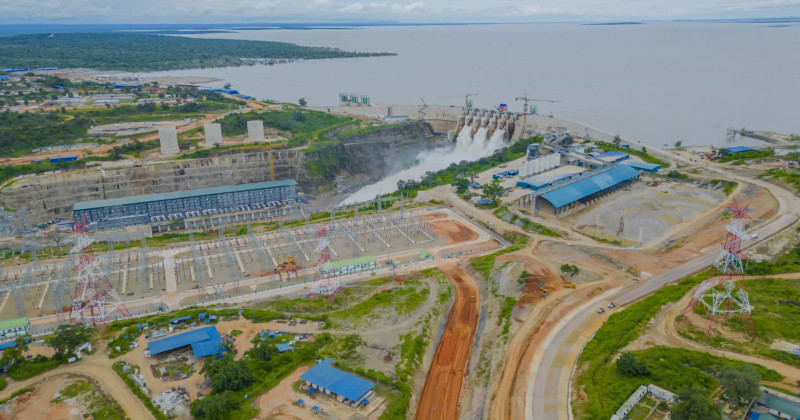
The 2024 drought, the most severe on record, exposed the vulnerability of Zambia’s hydropower-heavy energy mix, forcing the mining sector—the country’s primary economic engine—to seek alternative and more resilient power sources. By connecting Mwakibete in southwestern Tanzania to the Zambian border town of Nakonde, Kanona’s project intends to facilitate the import of surplus electricity from Tanzania’s recently expanded generation fleet, including the 2,115 MW Julius Nyerere Hydropower Plant.
“It will not only increase Zambia’s capacity to bring imported power into the country, but it will also create the necessary redundancy to further strengthen the grid and secure supply,” a company spokesperson said in response to emailed questions. The firm, which was incorporated in 2023, is positioning itself as an agile competitor to state-led initiatives, projecting a construction timeline of just one year.
This aggressive schedule could see the private link operational well ahead of a separate, more ambitious interconnector backed by $245 million in World Bank financing. While the government-led Zambia-Tanzania Interconnector Project (ZTIP) has been in the planning stages for over a decade and is targeted for 2028, the entry of private capital signals a new era of “open access” in Zambia’s energy market.
Industry analysts view the project as a strategic move to satisfy the surging demand from global industrial heavyweights vying for Zambian copper. With the government aiming to triple copper production within a decade, the ability to bypass national grid constraints through private transmission corridors is becoming an increasingly attractive proposition for investors and mining operators alike.
Africa eyes $8.6 trillion untapped mineral bounty to solve jobs crisis
CAPE TOWN – Africa is standing at the precipice of an industrial renaissance as the race for critical minerals transforms the continent’s $29.5 trillion resource base into a primary engine for mass employment. According to the Compendium of Africa’s Strategic Minerals 2026, released recently by the Africa Finance Corporation (AFC), the continent holds approximately 20% of global reserves, with a staggering $8.6 trillion in mineral wealth remaining entirely untapped. This vast subsurface value is now being positioned by policymakers not merely as an export commodity, but as the foundational capital required to realise a continent-wide job creation agenda through downstream industrialisation.
The shift from raw extraction to high-value processing is already yielding tangible labour market gains in southern Africa’s mining hubs. In Namibia, the resumption of uranium production alongside a strategic pivot into rare earths and lithium saw the industry headcount climb to 20,843 by the end of 2024. Addressing investors in Cape Town, Deputy Minister of Industries, Mines and Energy Gaudentia Krohne emphasised that the state is moving beyond traditional mining to integrate small-scale operators into the formal economy. “Namibia is committed to supporting small-scale miners and improving livelihoods; we are focusing on finance support schemes and training support programs to equip our workforce with emerging skills,” Krohne stated, signalling a move toward a more inclusive, skill-heavy labour force.
In neighbouring Zambia and South Africa, the link between aggressive capital expenditure and payroll expansion is becoming increasingly explicit. South Africa has outlined a bold R2 trillion mobilisation plan over the next five years to fortify its critical minerals value chain, supporting a formal mining workforce that remained stable at 468,000 workers in mid-2025. Meanwhile, Zambia’s “copper bull” run is being fueled by massive private injections, including a $1.5 billion investment by Vedanta Resources at Konkola Copper Mines and KoBold Metals’ $300 million Mingomba project, the latter of which is expected to generate over 700 direct high-tech mining jobs as it develops one of the world’s highest-grade copper deposits.
However, the transition from “potential” to “paychecks” depends heavily on bridging a persistent investment gap that continues to bottleneck local operators. Molebogeng Mazibuko, AFC’s Associate Vice President of Investment, noted during African Mining Week 2025 that while the AFC’s $700 million in sector investments has already generated 15,000 jobs, the broader challenge remains connecting global liquidity with “bankable” African projects. With the Democratic Republic of Congo (DRC) having only exploited 10% of its estimated $24 trillion in reserves, the appetite from the U.S., Europe, and China to secure supply chains offers a historic window for African nations to negotiate for local value addition—ensuring that the $8.6 trillion in untapped wealth stays on the continent in the form of wages and infrastructure.