



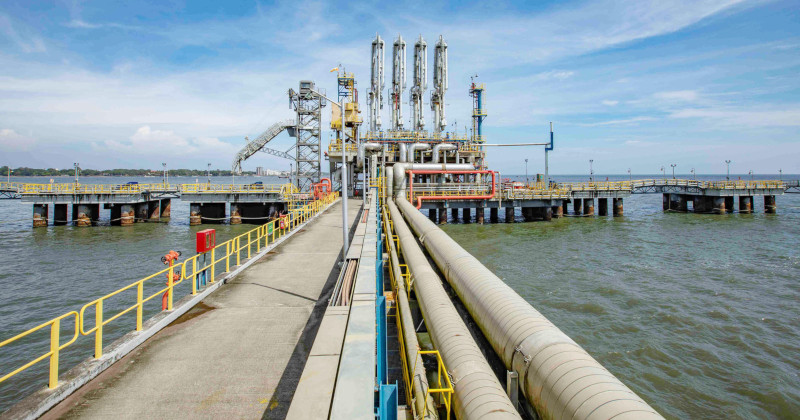
The East African energy landscape is on the cusp of a significant shift as Tanzania and Uganda move to finalise the $5 billion East African Crude Oil Pipeline (EACOP). Following a high-level bilateral meeting in Dar es Salaam recently, Tanzanian President Samia Suluhu Hassan has confirmed to her Ugandan counterpart, President Yoweri Museveni, that the 1,443-kilometer heated pipeline is on a definitive trajectory to begin transporting crude oil by July 2026. This milestone marks the culmination of years of complex cross-border engineering and financial coordination, signalling a new era of industrial cooperation for the East African Community.
The project, which is approximately 81% complete as of February 2026, is designed to unlock landlocked Uganda’s petroleum reserves by connecting the Lake Albert oilfields to the Tanzanian port of Tanga. For the regional economy, the pipeline represents more than just energy infrastructure; it is a catalyst for large-scale industrialization, with the Tanzanian government forecasting revenues exceeding $2.3 trillion over the project’s operational lifespan. This influx of capital is expected to provide the fiscal space necessary for both nations to fund ambitious domestic infrastructure agendas and reduce reliance on external debt.
“Implementation of the East African Crude Oil Pipeline (EACOP) Project is on course, with oil transportation expected to commence in July,” President Samia Suluhu Hassan stated during a joint press briefing at State House. She further emphasized that the cooperation extends beyond crude oil, with active plans now in motion for a reciprocal natural gas pipeline from Tanzania to Uganda and a refined petroleum products line to bolster regional energy security. This integrated approach aims to create a circular energy economy within the Great Lakes region, reducing the high costs associated with importing refined fuels from overseas markets.
The diplomatic engagement between the two leaders, which marked Museveni’s first foreign visit following his re-election in January, focused heavily on dismantling the non-tariff barriers that have historically stifled East African trade. By integrating their standard gauge railway (SGR) networks and streamlining port logistics at Dar es Salaam and Tanga, both nations are positioning themselves as a unified logistics hub. This synchronization of transport corridors is intended to offer landlocked neighbors a more efficient route to international markets, effectively challenging the traditional dominance of other regional trade routes.
Despite the project’s technical progress, the consortium—led by TotalEnergies and CNOOC alongside the national oil companies of both host nations—continues to navigate a complex global financial environment. While some Western lenders withdrew under intense environmental, social, and governance (ESG) pressures, the partners have successfully tapped into alternative financing streams to maintain momentum. The resilience of the EACOP project is increasingly seen by market analysts as a litmus test for the viability of large-scale fossil fuel infrastructure in emerging markets amidst the global transition toward renewable energy.